

RECENT POSTS
-
 April 6, 2026
 -
 March 23, 2026
 -
 March 16, 2026
 -
 March 9, 2026
 -
 March 2, 2026
5 Ways to Save on Energy Bills in Washington, D.C. Homes
Energy bills in Washington, D.C. often rise silently, then strike sharply. Humid summers, cold winters, and aging homes can cause consumption to escalate unnoticed.
Yet savings come from changes: minor upgrades, mindful habits, and small, consistent shifts working together to cut costs.
If you get the basics right, the savings follow.
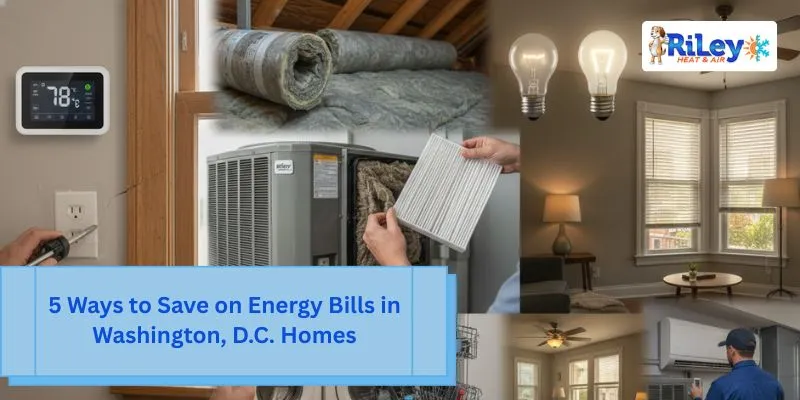
1. Optimize Your Thermostat Settings
It may sound too simple, but this is one area where you have a lot of power. The cost of keeping your house warm or cool is a significant portion of your overall energy consumption, and even a small tweak can go a long way.
Experts recommend that, for those living in D.C., keeping your thermostat at 78°F when you are at home and 68°F when you are away is a good starting point. You may also want to consider adjusting the setting depending on the time of year and your schedule. Each degree you change your thermostat setting may help you shave 3% off your utility costs.
The part that people often overlook is that the system works best when its operation is consistent. Turning your system off and on or setting the thermostat to extreme levels means that your system is working harder, not smarter.
A programmable or smart thermostat is a simple, cost-effective solution that can help optimize your system for you. You may program it once, and then the system works quietly to reduce your consumption, especially while you are at work or while you are sleeping.
2. Seal Air Leaks and Improve Insulation
If your home is not sealed properly, you are basically paying to heat or cool the outdoors. Air leaks around windows, doors, ductwork, and even electrical outlets can account for a significant amount of wasted energy. In fact, fixing airflow issues alone can lead to savings of up to 30%.
Start small:
- Weatherstrip doors and windows
- Use caulk to seal cracks
- Install outlet gaskets
- Check attic insulation
These are low-cost fixes, but they add up fast. For D.C. homes, especially older row houses, insulation upgrades can make a dramatic difference. Better insulation keeps cool air inside during summer and traps warmth in winter, reducing the workload on your HVAC system.
3. Maintain and Upgrade Your HVAC System
The HVAC system is the powerhouse that runs your house. It is, in fact, one of the largest contributors to your monthly power bill. If you do not maintain your system, it will become less efficient. It means that dust buildup, wear and tear, and clogged filters will make your system work harder than required, increasing power consumption.
If your system is older than 10-15 years, consider upgrading to a new one. Nowadays, HVAC systems are much more efficient and can reduce power consumption significantly.
There is one other major advantage to maintaining your system. It means that your system will also last longer. So, you are saving money on your power bill, and you are also saving money that would have gone into replacing the system after a while.
4. Reduce Energy Waste from Lighting and Appliances
A significant amount of energy is wasted on things you are not actively using. Lights are left on, electronics are left in standby, and old appliances are wasting energy silently.
Considering lighting, the following applies:
- Use LED bulbs as they consume much less energy and last much longer
- Switch off the lights in rooms that are not being used
- Use natural lighting
Then, move on to other appliances:
- Switch off electronics using smart power strips
- Use cold water to wash clothes
- Use full loads while using the dishwasher and washing machine
Even something as simple as setting the temperature of the water heater to 120 degrees can help save energy. Although each of these is a minor task, they can collectively help you save a significant amount on your bills.
5. Control Heat Gain and Use Natural Cooling Strategies
Washington, D.C., summers bring heat and humidity. That combination pushes your cooling system to its limits. But not all cooling has to come from your AC.
Simple adjustments can reduce indoor heat naturally:
- Close blinds and curtains during hot days
- Use ceiling or portable fans to improve airflow
- Avoid using ovens or dryers during peak heat hours
- Cook early morning or late evening
Blocking sunlight alone can significantly reduce indoor temperatures and lower cooling demand. Fans, in particular, are underrated. They do not cool the air, but they make you feel cooler, which means you can raise your thermostat without sacrificing comfort.
Conclusion
Saving energy in Washington, D.C., is not something that comes from making one big change. Rather, it is the total of all the little, smart decisions you make every day. Turn down the thermostat, plug the drafts, take care of the HVAC system, and do not waste energy on things you do not need. Work with the system, not against it.
All these little things add up over time. If the system is laboring or the math does not add up anymore, then it might be time to call in the professionals. Contact Riley Heat & Air to schedule an inspection or tune-up. Get the system working the way it should, without all the guesswork.