

RECENT POSTS
-
 March 23, 2026
 -
 March 16, 2026
 -
 March 9, 2026
 -
 March 2, 2026
 -
 February 23, 2026
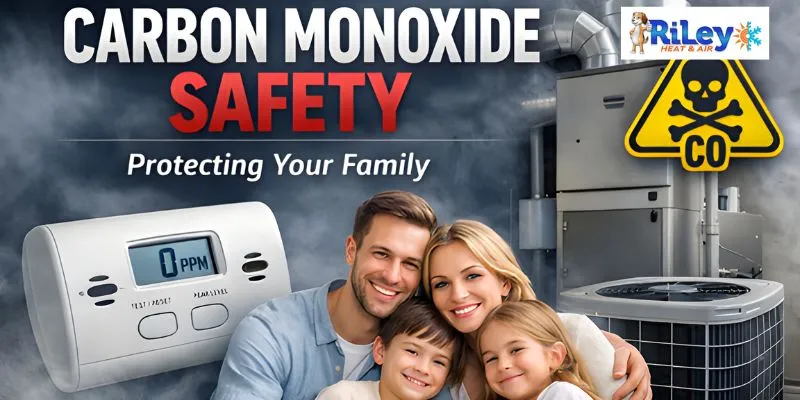
Carbon Monoxide Safety: How Your HVAC System Protects Your Family
Carbon monoxide (CO) is a silent killer, as it is non-visual, odorless, and tasteless, but it can kill you if you manage to collect it in your house. This is an uncolored, odorless gas that is formed during the partial burning of fuel and may be produced by furnaces, water heaters, stoves, fireplaces, and other fuel-burning appliances. Carbon monoxide unintentionally kills hundreds of people annually, and it hospitalizes thousands more in the United States every year.
Heating, ventilation, and air conditioning (or HVAC) is a key factor in keeping your family safe as well as stopping the accumulation of carbon monoxide. It controls the safe burning of fuels, exhaust to be vented, and fresh air circulation. However, an oversight or failure of the same system may turn into a route for the CO to percolate throughout the whole house.
We will go through the reasons why CO safety is a concern, how to reduce the risk with the help of HVAC systems, and what you can do to ensure your home is safe.
Understanding Carbon Monoxide and Its Risks
What Is Carbon Monoxide?
Carbon monoxide is generated whenever fuels such as natural gas, propane, oil, wood, gasoline, or charcoal are incompletely burned. A leak is hard to recognize because it is invisible and not perceived by human senses; however, once the symptoms are observed, they may vary from headaches and dizziness to nausea, confusion, and even death in the worst-case scenario.
Sensitivity to health, even in low doses over a period, can lead to health complications, particularly in children, the elderly, and individuals with heart or lung disorders. This explains the significance of detection and prevention.
Familiar Sources in the Home
The most likely potential sources of CO in residential locations are:
- Gas, oil, or propane-burning furnaces and boilers
- Water heating and fireplace
- Gas stoves and dryers
- Outdoor fuel-burning equipment (generators)
- Cars that are in attached garages
In case any of these systems is not maintained well or is improperly ventilated, CO may find its way into the living space.
How Your HVAC System Helps With Carbon Monoxide Safety
A majority of the new houses also have a built-in HVAC system, which comprises heating (which is usually done by the use of a furnace) and ventilation. These systems secure your home in several different ways when they are serviced and properly installed:
1. Controlled Combustion and Exhaust
The core of a gas-based HVAC is the heat exchanger - the part that houses fuel that burns in the heart of the system to generate heat. Under normal conditions, the heat exchanger forces the combustion gases, such as carbon monoxide, to flow safely out through vent pipes or flues. Properly maintained heat exchangers and open venting systems will make sure that the CO does not find its way into the air supply of your home.
In case the heat exchanger is damaged or cracked, however, usually by age or neglect, it may permit combustion gases to enter the air that is circulated in your home. It is also one of the most hazardous possible set points of failure in a heating system.
2. Ventilation and Airflow Management
Ventilation does not simply mean circulating air, but it is a matter of balanced air flow. Fresh air gets in through your HVAC system, gets filtered, and the stale air gets removed. The exchange eliminates the accumulation of indoor pollutants such as CO and aids in ensuring good indoor air quality.
When vents or flue pipes are clogged with debris (leaves, nests, rust, or snow), exhaust gases can build up in the building. The prevention of this hazard is through regular checking of vents and flues.
3. Filtration and Air Quality Awareness
Good HVAC systems have good-quality filters to capture dust, allergens, and other particulates. Although it is not the role of filters to eliminate carbon monoxide (since it is a gas), they keep the air flowing efficiently.
The inability to fully combust or overheat may result from the restricted airflow caused by dirty filters, and this may indirectly increase the likelihood of CO problems. The periodical replacement of filters and unrestricted airflow can make the system as a whole work safely.
4. Integration With Carbon Monoxide Detectors
HVAC systems are not the only element of an overall CO safety approach. Smoke sensors installed in various places of your house, especially around your sleeping areas and on all the levels, give early warning of the presence of dangerous CO levels.
Although detectors are not included in the HVAC hardware, they are used together with the system to warn you before the CO concentration becomes dangerous to your life.
Why Regular HVAC Maintenance Matters
Carbon monoxide threats can be best addressed by prevention. Conducting regular maintenance by a trained HVAC professional will guarantee that:
- The operation of combustion and ventilation systems is appropriate.
- Heat exchangers, vent pipes, and burners are complete and precise.
- There is efficient airflow and clean filters.
- Any malfunction symptoms are detected in time before they become a safety concern.
Annual or seasonal check-ups, preferably before the heating season starts, assist technicians in identifying possible problems such as broken heat exchangers, improper burning of fuels, or plugged vents. By catching them early, you can keep your family safer, and you can also conserve more energy by doing this.
Conclusion
It is imperative to take no chances when it comes to carbon monoxide safety. This is because, from ensuring that the combustion process is safe and that there is proper ventilation, a correctly maintained HVAC system will make a huge difference in ensuring that you and your loved ones are safe and sound.
Do not wait until you notice a problem. For excellent HVAC safety inspections, maintenance, and carbon monoxide detectors, contact Riley Heat & Air, and ensure that your home is a safe and comfortable haven.
Tags :