

RECENT POSTS
-
 March 16, 2026
 -
 March 9, 2026
 -
 March 2, 2026
 -
 February 23, 2026
 -
 February 16, 2026
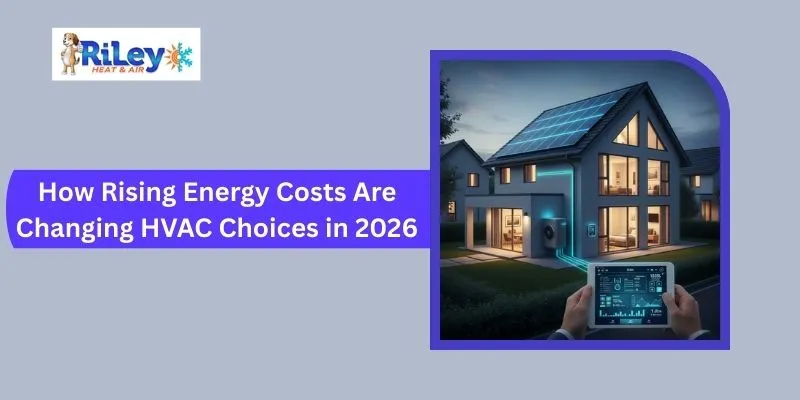
How Rising Energy Costs Are Changing HVAC Choices in 2026
In 2026, heating, ventilation, and air conditioning (HVAC) systems are expected to be used. As the cost of utility has kept increasing over the past few years, the perception of consumers towards comfort, efficiency, and long-term operating cost has changed drastically. The high costs of energy not only impact monthly bills but also the type of systems people install, how HVAC systems are developed by manufacturers, and the way professionals suggest replacing and upgrading.
In this blog, we will discuss the causes of such changes, the new HVAC methods and technologies the homeowner is adopting, and how some cost-effective choices today can be compensated through years of service.
The Importance of Energy Costs for HVAC Decisions
Heating and cooling are often one of the most significant expenses of a household in terms of energy consumption, commonly accounting for 40 percent or more of utility bills. Efficient and outdated systems can be costly to use, particularly when the electricity or fuel costs are on the increase, and HVAC efficiency is a priority for homeowners.
Older systems not only consume more energy, but they also waste energy. Parts corrode, the air supply is limited, the thermostats cannot control the temperature, and all this increases energy consumption and the cost of energy.
Due to increased energy costs, homeowners are now questioning such issues as:
- Will the system be more expensive to operate than it was 5 years ago?
- Would a more efficient system be worth this greater cost of installation?
These questions are transforming what the industry has and how consumers make their selection.
The Rise of Energy-Efficient Technologies
1. Heat Pumps as a Dual Solution
The heat pumps are gaining momentum as an energy-saving alternative to conventional furnaces and central air systems. Such systems are also able to cool and heat a home with a single unit, transferring heat instead of producing it, and can, in many cases, provide up to three or four times the energy they use.
Energy-wise, high-efficiency heat pumps can save a lot of utility in the long run, particularly compared to systems that are older or not efficient. They also work in conjunction with renewable energy options such as solar panels, and this will provide the homeowners with another tool to manipulate the long-term energy costs.
Nevertheless, there is a trade-off in the form of an increase in the price of electricity: although heat pumps are more efficient, the operating costs still may feel high due to the rise in electricity prices. Consumers should consider the efficiency and the local energy prices when settling on the appropriate system.
2. Variable-Speed and Smart Systems
New HVAC systems incorporate variable-speed compressors and motors. Whereas the traditional single-speed systems ride and stop at full capacity, variable-speed systems vary performance in real-time depending on the demand. This results in:
- Steadier temperatures
- Lower energy use
- Improved humidity control
With these technologies, the energy usage can be decreased by wide percentages; in the case of cooling energy usage by itself, up to 15-20 percent.
Smart HVAC systems are also linked with sensors, artificial intelligence, and Internet of Things (IoT) connectivity to track the usage trends and fine-tune performance to achieve maximum efficiency. The predictive maintenance alerts feature, as well as the ability to control the system remotely through mobile applications, contribute to comfort and energy efficiency.
3. Ductless and Zoned Comfort Systems
The ductless mini-split systems and zoned HVAC comfort strategies are gaining momentum in 2026 due to the ability to only heat and cool the needed areas. This special measure is capable of reducing power wastage, particularly in residential buildings where some rooms are not used throughout the day.
Comfort and equipment wear are also limited to a better system through zoning, which will increase the life of the system as well - a key element in a situation where energy costs take up a large portion of the home budget.
Cost Considerations: Upfront vs. Operating Costs
As the cost of energy is increasing, homeowners are increasingly considering the total cost of ownership, the total of the initial cost of installation, and the long-term operating cost. Economics is transforming in the following manner:
Upfront Investment
The newer, high-efficiency HVAC systems are also more expensive to buy and install compared to the older and less efficient systems. This is due to
- More modernized parts and technologies.
- Increased production cost because of new refrigerants.
- Labor shortage and wage increase in the HVAC industry.
- Costs and regulatory compliance, testing.
Operating Costs and Savings
The higher SEER2 rating, variable-speed technology, and intelligent controls of the systems can decrease the amount of energy used annually. The payback period of these systems is offered in most instances in the form of energy savings, utility rebates, and possible tax incentives.
Smart thermostats, e.g., may save an estimated 9 percent to 16 percent of heating and cooling energy consumption based on climatic conditions and system factors - savings that accrue rapidly as energy costs increase.
Conclusion
With the rising energy costs of 2026, there is a significant change in the way homeowners think about HVAC systems. No longer is efficiency just a desirable option, but it is now a fundamental part of our financial planning and our responsibility to the environment. From heat pumps to smart home systems, ductless zoning, and control options, the choices we make when it comes to our HVAC systems are important ones that will impact our homes for years to come.
Are you ready to start learning about energy-efficient HVAC options? Contact Riley Heat & Air to get started!