

RECENT POSTS
-
 February 23, 2026
 -
 February 16, 2026
 -
 February 9, 2026
 -
 February 2, 2026
 -
 January 26, 2026

Simple Home Adjustments That Improve Heating Comfort Without Upgrades
When the temperature drops, most homeowners assume better heating comfort requires new equipment, costly upgrades, or a major renovation. In reality, that is rarely the first step. Many comfort issues have less to do with the heater itself and more to do with how well your home holds onto warmth and distributes it.
Small, thoughtful adjustments can make a noticeable difference. The kind you can handle over a weekend. The kind that quietly improve comfort without drawing attention to themselves. And often, the kind that helps your heating system work less, not more.
Below are practical, no-upgrade ways to make your home feel warmer, more balanced, and easier to live in during colder months.
1. Start With Heat Loss, Not the Heater
Before touching the thermostat, it helps to understand where heat escapes. Most homes lose warmth through predictable trouble spots such as the windows, doors, attics, and small gaps you barely notice until winter arrives.
Drafts around doors and windows are common culprits. Even newer homes can develop tiny gaps over time as materials expand and contract. A bit of weatherstripping or caulking can seal those leaks and immediately reduce cold air intrusion. It is a simple fix, but one that pays off quickly in comfort.
Insulation plays a similar role. Attics and crawl spaces are especially important, since warm air naturally rises. When insulation is thin or uneven, heat escapes before it ever has a chance to warm living areas. Improving insulation coverage does not require new heating equipment, but it can dramatically change how long warmth stays inside.
2. Use Your Thermostat More Intentionally
Comfort is not just about how warm or cool your house feels. Timing matters, too. Think about it: lots of homes stay toasty all day, even when nobody’s there, and then feel cold right when everyone comes back. If you set your thermostat to match your daily schedule, you skip that awkward chill when you walk in.
Drop the temperature at night or when you are out, then turn it back up before you wake up or get home. Programmable and smart thermostats make this simple, but honestly, even if you adjust things by hand, it still works. The trick is to avoid those big swings that make your system work overtime. Keep things steady, pay a little attention, and you will stay comfortable.
3. Change the Direction of Ceiling Fans
This one surprises people. Ceiling fans are not just for summer. In winter, switching the fan direction clockwise at a low speed pushes warm air back down from the ceiling. That heat is already there, and you are just reclaiming it.
Rooms with high ceilings benefit the most, but even standard-height rooms can feel more evenly heated once warm air is redistributed. It is a small adjustment that often makes rooms feel warmer without touching the thermostat at all.
4. Do Not Overlook Air Filters
A clogged air filter sneaks up on you. Dust and gunk build up, and suddenly, warm air just does not move as it should. Some rooms get chilly, others turn stuffy, and your system works overtime trying to catch up.
But swap out that filter every month or two, and things smooth out fast. Air flows better, temperatures even out, and your heater does not have to fight so hard. It is a quick fix, but it makes a big difference.
5. Let Window Treatments Do Their Job
Even in the good state of windows they provide a significant source of heat loss. Glass just is not as good at insulating as walls.
Insulated blinds or thick curtains are useful in keeping cold air out of the house at night as well as on windy days. Sealing them at night puts an additional distance between your home and the environment. When the weather is sunny, on a sunny winter afternoon in the afternoon, it will keep the rooms warm without them being opened.
6. Improve Airflow Inside the Home
Sometimes rooms feel cold, not because there is not enough heat, but because warm air cannot reach them easily. Furniture placed over vents, rugs blocking floor registers, or closed interior doors can interrupt airflow. Making sure vents remain open and unobstructed allows heat to circulate properly.
In frequently used areas, keeping interior doors open helps balance temperatures across rooms. Warm air moves more freely, reducing hot-and-cold zones that make homes feel uncomfortable.
7. Pay Attention to Maintenance, Even Without Upgrades
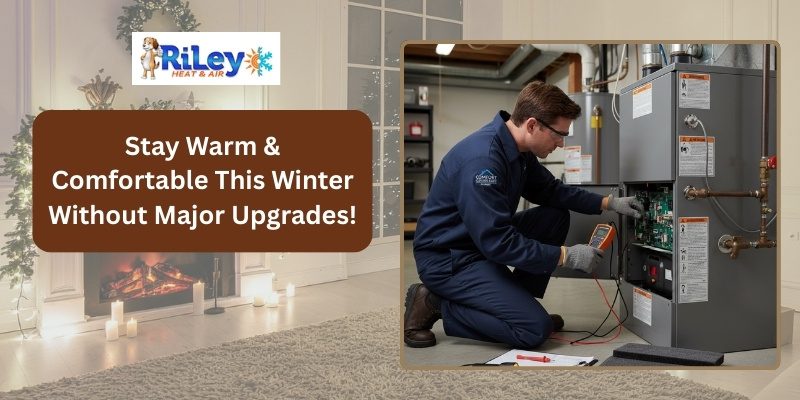
Regular maintenance of the heating system is not a renovation; it is maintenance. Seasonal checkups are used to point out minor problems before they become more serious. Dirty components, or burners that are not positioned correctly, or thermostats that are not set correctly, can all cause heating to perform less well, but not to completely break down.
Professional inspection makes sure that your system is running safely and efficiently, which affects the warmth of your home on a day-to-day basis. Maintenance is what fixes comfort complaints that appear to be far larger than people thought at the beginning of the process to many homeowners.
8. Build Habits That Support Warmth
A single change does not make things more comfortable. It is the combination of a lot of little choices. It is also advisable to close the garage door on time, close unused fireplace dampers, and not to adjust the thermostat constantly, as this helps in keeping the indoor temperatures constant.
Cooking and even using the oven can also add a little bit of heat during the evenings when it is cold. These are kinds of habits that do not seem dramatic, but in the long run, they build up to create a home that seems much warmer and easier to handle.
Conclusion
The comforting warmth is not necessarily something new. If you know how your home acts in the winter and adjust it in a few minor ways that help it cope, that more often than not is the source of it.
Riley Heat & Air thinks the place to begin to be better with your comfort is to use what you already have in a better way. When you are willing to move the next step towards a warmer, more balanced house, contact an estimated local expert and consider your opportunities with certainty.