

RECENT POSTS
-
 April 13, 2026
 -
 April 6, 2026
 -
 March 23, 2026
 -
 March 16, 2026
 -
 March 9, 2026
Smart Thermostat Tips to Reduce Winter Heating Costs in 2026
The truth is, saving money on heating does not mean you need to be cold all winter or constantly adjust your thermostat. It is about knowing how to use your smart thermostat, taking advantage of its features, and following a few smart habits. When you do it right, the savings add up gradually, month by month.
The Importance of Thermostats in 2026
With energy prices changing and homes more connected, smart thermostats now offer much more than just set-and-forget schedules. They learn your habits, detect if you are home or away, pay attention to the weather, and even show you where your money goes.
Thermostats are devices designed to reduce wasted heat. Rather than keeping your home warm all day, a smart thermostat automatically adjusts. It keeps you comfortable when you are there and eases off when you are not. That one simple change can make a noticeable difference through a long winter.
Expert Tips to Reduce Winter Heating Costs in 2026
1. Finding the Right Winter Temperature
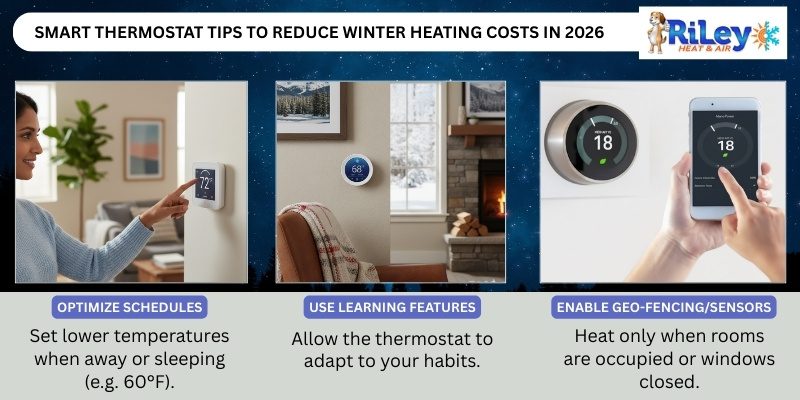
To save on heating, the advice is simple: choose a practical temperature. Most experts recommend 68°F when you are home and awake. Lower it to 60–65°F when you are asleep or out, and you will use less energy without sacrificing comfort.
Dropping the temperature by even four to seven degrees can reduce your costs over time. The beauty of smart thermostats is that they handle this for you—no need to remember to turn the heat down at night or before leaving for work.
2. Do Not Overdo the Temperature Swings
It is tempting to turn the heat way up when you come into a cold house, but that only wastes energy. Most heating systems will not warm your home any faster if you set the thermostat higher. It just keeps the heat running longer.
Smart thermostats make gradual, steady adjustments instead. Small changes are easier on your system and usually more efficient. Keeping things steady works best, especially during long, cold spells.
3. Let Your Thermostat Learn Your Life
The real advantage of smart thermostats is how they learn from you. Over time, they figure out when you wake up, leave the house, return, and go to bed. Using this information, they create a schedule that matches your routine.
No more heating an empty house during the day or coming home to a cold living room. That balance between comfort and savings is where you will notice real benefits. If your schedule changes, you can always adjust things from your phone.
4. Get the Most Out of Occupancy Features
Smart thermostats typically depend on motion sensors or your phone’s location to determine if anyone is home. If the house is empty, they automatically lower the heat. But you need to place those sensors where people actually spend time, like the living room or bedroom.
If you put one in a drafty hallway or a room you rarely use, the system might think of someone's home when no one is—or it might turn on the heat when it is not needed. But if you place them correctly, the heat goes exactly where you want, with no extra hassle.
5. Choose the Best Location for Your Thermostat
Even the smartest thermostat cannot do its job if it is installed in the wrong spot. Please do not put it near kitchens, bathrooms, outside walls, or anywhere that gets a lot of sunlight. These areas heat up or cool down faster than the rest of the house.
Placing it in the room where you use it often is the best place for it. Some smart thermostats include extra sensors for other rooms to help balance things out. Just use them wisely.
6. Adjust Settings for Your Heating System
No two heating systems operate in the same way. Furnaces, boilers, and heat pumps each have their own characteristics. For instance, heat pumps are already efficient, but they work best if you keep the temperature consistent instead of frequently adjusting the settings.
If your home always feels cold, your heating system might be too small or could need some maintenance. In these cases, lowering the thermostat a little can keep your heater from running constantly, which helps save energy over time.
7. Do Not Ignore Maintenance and Insulation
For a smart thermostat to be efficient, the rest of the system must be performing well. Do not forget about insulation, either. When heat escapes through the attic, windows, or doors, your heater has to work harder.
Even the smartest thermostat cannot solve major air leaks. It acts like the brain of your system, but if the body is not in good shape, it will never run properly.
8. Monitor Your Energy Reports
Smart thermostats often provide energy reports that show when you use the most heat, where energy is being wasted, and what your daily habits are like.
Sometimes, these reports reveal patterns you might not notice yourself—such as unusual spikes in usage at certain times or on specific days. If you review this information and adjust your settings accordingly, you can end up saving money during the winter.
Comfort and Efficiency Work Together
A lot of people assume that saving energy means being less comfortable, but that is not true. Smart thermostats are designed for both. They reduce unnecessary heating, smooth out temperature changes, and adapt to your daily routines.
The result is that your home becomes more comfortable, and there is no energy wastage. Winter heating does not have to be stressful or expensive.
Conclusion
With winter, now is the perfect time to make sure your thermostat is working with you, not against you. If you need help tuning up your system or choosing a smart thermostat that fits your needs, Riley Heat & Air is here to help. You will get expert guidance on a setup that keeps you comfortable and helps you save energy all season long.