

RECENT POSTS
-
 September 22, 2026
 -
 September 15, 2026
 -
 September 8, 2026
 -
 September 1, 2026
 -
 August 24, 2026
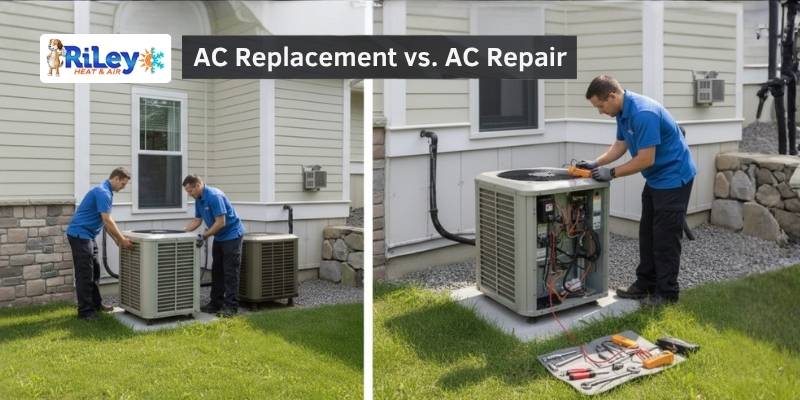
AC Replacement vs. Repair: What Homeowners in Maryland Should Know This May
Most Maryland homeowners will reach a point at some time, typically in the middle of a hot, muggy May afternoon, when the AC begins to “act up.” Not broken but not right. The air is more subdued. The unit operates for a longer period of time. Energy costs gradually increase. Then the question arises: should we fix up this thing once more, or is it time to replace it?
This is no simple matter of choice. Where summers are hot and humid, winters require heating, and HVAC systems are in operation nearly all year long, like Maryland and the Washington DC region, the need for a competent professional to maintain the system is more pronounced.
Let's get clear about it then.
Understanding the Real Difference: Repair vs. Replace AC
Most of the time, the repair is the simpler and more affordable route. But sometimes it is. Many times, a capacitor, thermostat, or refrigerant problem can be easily and cost-effectively resolved, often at a cost of a few hundred dollars.
However, things get tricky when it comes to HVAC failures: They do not all occur simultaneously. They age slowly. Efficiency drops first. Then comfort suffers. After that, the repairs become more regular.
At some point, you cease to fix “a problem” and begin working with a system that is just running out of life. In Maryland, many HVAC experts say the following is a good guideline: Replacement begins to become more cost-effective in the long term when repair costs become close to 30–50% of replacement costs, particularly in older systems.
That is the point; most homeowners are not aware they have passed.
When AC Repair Still Makes Sense
Not all problems are urgent and need to be addressed. There are times when repair is the best option, particularly when:
- The system was installed less than 10 years ago.
- The problem is something minor, like a capacitor, sensor, or thermostat.
- Cooling is still consistent overall.
- This is the first or second repair in the years.
Common AC repair problems in Maryland range from about $165 to $500 on average. Some repairs, such as replacing an AC, can end up being even more expensive than replacing the AC, but only in the short term. Yes, repair is valid. It all depends on what you are fixing and just how often.
When Replacement Becomes the Smarter Move
At some point, it is not feasible to keep enhancing an old system.
Your HVAC professional will be able to identify a few key indicators:
- The system is 12-15 years old.
- Repairs are taking place all year long.
- Cooling is not uniform (some rooms are freezing, and others are warm)
- There have been no reductions in energy prices; in fact, energy bills continue to climb.
- The unit has difficulty on hot days.
When that time comes, it is not simply a matter of comfort; it also involves efficiency and cost management. Depending on the efficiency improvement and installation quality of a new system, energy consumption can be reduced by 20-40%. And in places with a humid summer, such as Maryland, that disparity becomes apparent early on.
What Homeowners in Maryland and DC Should Expect to Pay
The majority of homeowners who are considering AC replacement in Maryland fall into a wide range, based on the type of system and the size of the home.
- Basic systems: around $4,500–$6,000
- Mid-range systems: about $6,000–$8,000
- High efficiency or premium systems: $8,000 – $9,500+
Labor and permitting costs are higher in nearby Washington, DC, and averages are about $6,000+, with common ranges between $4,500 and $8,300. When installation complexity, ductwork adjustments, and efficiency upgrades are added to the equation, full HVAC installation in Washington, DC can even go up in the rankings.
When asked about the cost of a new air conditioner, the truth is that it can range quite widely and typically is not a small purchase.
The Hidden Costs Nobody Talks About
There are other factors that also subtly work their way into the total price, aside from the unit:
- Inspection of the duct and condition (leaks or low insulation level will cost more)
- New wiring for modern systems:
- The size and complexity of the home
- The higher the efficiency rating, the higher the cost of the unit up front (higher SEER = higher upfront cost)
- Permitting and installation guidelines
That is the reason why two homes in the very same neighborhood might get some wildly different quotes for essentially the same job.
Repair or Replace?
The easiest way to explain it:
Repair if:
- This is a fairly new system.
- The fix is minor and inexpensive.
- There has been no noticeable decrease in comfort.
Replace if:
- The system is more than 12-15 years old.
- Repairs have become frequent.
- Cooling performance is variable
- Higher and higher energy bills are becoming a reality.
Most importantly, if you are always second-guessing yourself every summer, going back and forth is an indicator. Since HVAC systems do more than just cool, they are all about efficiency, reliability, and not letting up during the peak heat.
Conclusion
There is not a lot of room for error when it comes to HVAC systems and climate in Maryland. The warm summer temperatures, high humidity, and extended use seasons all contribute to the accelerated wear. This is why it is important not to hasten or procrastinate on repair-versus-replace AC decisions.
While the initial cost of replacing the HVAC system may seem high, the benefits of doing so can include lower maintenance costs, energy savings, and fewer service visits over time. When considering Maryland AC replacement or looking into HVAC installation in Washington, DC, services, the best course of action is to consult a professional before your HVAC system fails.
Then, when the time arrives, Riley Heat & Air is here to help you make the right decision that is right for your home, your budget, and your long-term comfort.
Tags :