

RECENT POSTS
-
 October 19, 2026
 -
 October 12, 2026
 -
 October 5, 2026
 -
 September 22, 2026
 -
 September 15, 2026
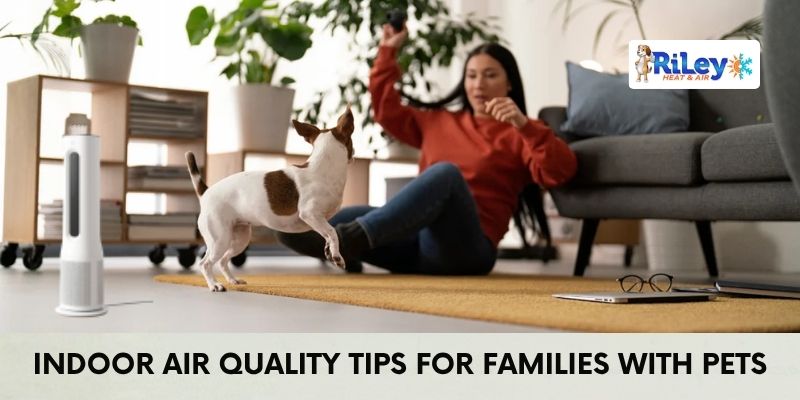
Indoor Air Quality Tips for Families with Pets
You enter a house where there are pets, and you know right away. Not only the wagging tails or the soft purring in the background, but something less tangible – something in the air itself. A faint heaviness. A little dust that will just not go away. Perhaps the smell of dust or dry air from closed windows for too long.
It is not unusual. Homes with pets will have more dander and hair, as well as any pollen tracked in by people or settled on fabrics and circulated in HVAC systems. This invisible layer is more visible over time for families, particularly those with children or allergy sensitivities. The happy news is that it is manageable – while you can still keep your beloved pets.
Understanding What is Really in Your Indoor Air
Most people think that the main problem is pet hair. It is not. Hair is visible. Easy to vacuum. Easy to blame.
The problem is pet dander, minute skin flakes that contain saliva proteins that animals shed by default all day. These particles are small enough to be suspended in the air and yet large enough to stick to carpets, upholstery, bedding, and even HVAC filters. When your HVAC system is running, those particles can be moved throughout the entire house.
Why Families Feel It More Than They Expect
Children, older adults, and people with asthma or seasonal allergies are more sensitive to changes in the indoor air. Although you may not notice any symptoms at all, you might experience slight symptoms such as congestion in the morning, irritated eyes, and a stuffy feeling after a long night in the house.
In many household environments, the HVAC system is responsible for carrying these particles. Each heating or cooling cycle draws air through filters, circulates it, and does it over and over throughout the day. If the filtration is not adequate or is not replaced with sufficient frequency, particles remain in circulation, rather than being retained.
This is where the small changes count.
The Foundation: Keep Your HVAC System Working With You
Your HVAC system is not just for temperature control. It is also the first line of air filters. Most standard filters are used for dust protection and not to catch fine airborne allergens. For homes where pets are present, the installation of a filter upgrade can drastically cut down on circulating dander and make a big difference in terms of freshness in the home's air.
Some simple changes can make a difference:
- Ensure that the filters are more efficient and have a higher rating for smaller particles.
- Change filters more often than usual, particularly if there are several pets in the house.
- Replace filters every month rather than when you see dirt accumulation.
As filters clog, air flow reduces, and the particles are able to go around the filter. This results in your system operating longer, but cleaner air is not reaching you, quietly impacting your comfort and energy consumption.
Cleaning Habits That Actually Change Air Quality
Cleaning is more than just aesthetic; it has a real impact on breathing. Vacuuming equipment that seals the filter and keeps the fine particles from re-entering the air is best. Upholstery, rugs, and pet bedding should be taken care of separately as they collect dander more effectively than hard surfaces.
There is also timing. Cleaning just before HVAC cycles or periods of air movement helps to stop re-distributed particles from re-entering living spaces.
But other very simple habits are more important than people think:
- Regularly cleaning pet bedding and surfaces in the yard.
- Washing soft furnishings such as cushions and throws
- Using damp fabric to wipe surfaces rather than dry dusting to raise dust and spread it back into the air
Simple habits consistently done can change the overall dynamics of the atmosphere in the home.
Pet Grooming: The Source-Control Strategy
Air quality control begins at the source. Frequent grooming will have the benefit of minimizing loose fur and dander in the house. Even if it is possible, keep pets outdoors so that particles are not circulated inside. Depending on the breed and coat, bathing routines also help minimize buildup on the skin and fur.
Minor activities such as wiping paws after going outside can reduce the amount of pollen and dust that comes indoors. Do not aim for perfection. It is about minimizing the effect prior to it becoming airborne.
Air Purification and Why Placement Matters
The air purifiers are a popular choice for families that own pets. And, there is a reason for that. Very fine particles like pet dander can be trapped before they settle or recirculate by the devices with HEPA-level filtering. However, there is more to placement than people think.
A purifier in a corner is not going to work the same as one in a place where pets live, like a living room, bedroom, or family room. Airborne particles are continuous, not one-time events, and that is why it matters if they are run consistently, not occasionally.
However, air purifiers are most effective when used in conjunction with other air purification methods, rather than as a single solution.
Ventilation: The Overlooked Reset Button
A change of air is usually overlooked, particularly in cold or over-conditioned houses.
The controlled ventilation vents indoor air and refreshes the air in the room. Ventilation of windows during periods of acceptable outdoor air quality will help to mitigate accumulation. When mechanical ventilation is available, it allows the exchange to be more constant, independent of weather conditions.
Any time your pet is inside your house, even for short periods during the day, can help to eliminate that “closed indoor” sensation that sometimes occurs.
Conclusion
Having pets at home does not necessarily mean compromising air quality. It just entails understanding the way that air flows within the home and how lifestyle impacts the presence of particles floating inside it. Proper filter changes, regular pet grooming, proper cleaning practices, and even using air purifiers can make a difference.
In case you and your family members wish to improve your living standards in terms of comfort and health, you might want to receive help from experts. Riley Heat & Air is an expert in assisting homeowners to achieve such objectives, depending on their actual situations, including having pets.
Tags :