

RECENT POSTS
-
 September 22, 2026
 -
 September 15, 2026
 -
 September 8, 2026
 -
 September 1, 2026
 -
 August 24, 2026
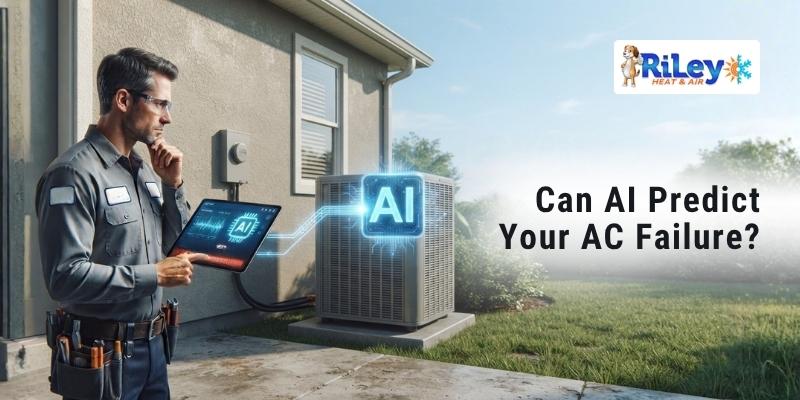
Can AI Predict Your Air Conditioner Will Fail Before It Breaks? Here’s What Homeowners Should Know
There’s never a convenient time for your air conditioner to stop working. One day it's cooling your home perfectly, and the next, it suddenly fails during the hottest week of summer. Besides making your home uncomfortable, unexpected AC breakdowns can also lead to expensive air conditioner repair.
Thanks to advances in artificial intelligence (AI), homeowners now have access to smarter ways to monitor their HVAC systems. While AI can't predict every mechanical failure with complete certainty, it can identify early warning signs that often appear before major problems develop.
So, can AI really predict when your air conditioner is about to fail? Let's take a closer look.
What Is AI Predictive Maintenance for HVAC Systems?
The term "predictive maintenance" means using artificial intelligence, machine learning and data analytics to monitor the equipment performance continually. In predictive maintenance, the artificial intelligence does not work with failures only; rather, it analyzes how the AC unit performs currently.
Modern HVAC systems equipped with smart sensors can monitor:
- Compressor performance
- Refrigerant pressure
- Indoor and outdoor temperatures
- Airflow rate
- Fan motor speed
- Electrical current and voltage
- Humidity levels
- Compressor run time
- Energy consumption
- System start-and-stop cycles
AI-powered software continuously analyzes this data to establish normal operating patterns. When the system detects unusual behavior—such as increased energy use, longer cooling cycles, or abnormal electrical readings—it alerts homeowners or HVAC professionals before a small issue turns into a major repair.
How AI Detects Problems Early
In the traditional maintenance model, much relies on the visual inspection and regular service visits. AI, however, watches the activity going on in the system on a daily basis.
Unlike traditional maintenance, which relies on scheduled inspections, AI continuously evaluates thousands of operating data points in real time. Instead of reacting after a failure occurs, predictive monitoring looks for subtle performance changes that often signal developing mechanical or electrical problems.
AI can identify, such as:
1. Increasing Compressor Stress Before Failure
A failing compressor often shows warning signs before it stops working completely.
If there are power consumption variations or longer cooling periods or if there are operating temperature increases, this could be an indication of excessive strain. This enables AI to detect these patterns early, warn technicians before significant damage occurs to the compressor.
2. Airflow Restrictions
Air filters that are dirty, evaporator coils that are clogged, blocked ducts or a broken blower motor can cause airflow to gradually decrease.
These changes are gradual so homeowners may not be aware of them immediately. AI can also detect airflow patterns that are decreasing, and recommend AC maintenance before cooling performance begins to decline.
3. Detecting Refrigerant Leaks Early
Typical little leaks in the refrigerant gradually form.
As opposed to when pressure drops significantly, AI can also detect a pressure drop, more prolonged compressor run times, and loss of efficiency, which are frequently observed when refrigerant is lost.
4. Electrical Component Wear
All capacitors, contactors and relays will wear out as they get older.
Abnormal electricity readings, inconsistent voltage patterns, or inconsistencies in start-ups can also be signals from these components that they are in danger of failing, and AI monitoring can detect them.
5. Identifying Fan Motor Wear
In most cases fan motors will exhibit signs of trouble before they fail.
When the motor's speed, vibration or electric usage changes, there's a high risk of an impending mechanical failure. These can be identified by an AI system before the motor actually fails.
Can Smart Thermostats Use AI?
Many homeowners wonder whether a smart thermostat can predict air conditioner problems. While most smart thermostats don't diagnose mechanical failures on their own, many modern models use artificial intelligence and machine learning to analyze your home's heating and cooling patterns.
By monitoring factors such as indoor temperature, system run times, energy consumption, and thermostat settings, AI-enabled thermostats can detect unusual changes in your HVAC system's performance. Some advanced systems can alert homeowners when the air conditioner is running longer than normal, struggling to maintain the desired temperature, or operating less efficiently than expected.
When paired with smart HVAC monitoring devices or high-efficiency air conditioning systems equipped with built-in sensors, these thermostats provide even greater insight into system performance. Together, they can help identify potential issues earlier, allowing homeowners to schedule maintenance before minor problems develop into costly repairs. If you're considering upgrading your home's comfort system, check out our guide on the benefits of installing a smart thermostat to learn how it can improve energy efficiency, comfort, and system performance.
It's important to remember that smart thermostats complement professional HVAC maintenance—they don't replace regular inspections or expert repairs. A qualified HVAC technician is still needed to diagnose issues accurately and perform any necessary maintenance or repairs.
Benefits of AI-Powered Air Conditioner Monitoring
Fewer Unexpected Breakdowns
The biggest benefit of predictive maintenance is to avoid emergency failures. Early detection helps problems to be fixed at opportune times, rather than when an unplanned system shutdown occurs.
Lower Repair Costs
With minor issues, if not addressed, they become costly repairs. For instance, if the capacitor is worn then it's far less costly to replace it than a broken compressor that failed due to the capacitor not being replaced.
Longer Equipment Life
Small problems that can be tackled promptly lead to less wear and tear on air conditioners. Keeping the air flowing, refrigerant levels and electrical performance optimally will minimize stress levels on the larger components, extending the life of the system.
Better Energy Efficiency
There are numerous HVAC issues that can cause an increase in energy usage before a loss in comfort. AI can detect loss of efficiency early on so that homeowners can save on unnecessary utility expenses without sacrificing cooling efficiency.
Improved Comfort
A well-functioning air conditioner cools down evenly, keeps the humidity level down and maintains stable temperature inside the house. Predictive monitoring can be used to ensure optimal system performance during the cooling season.
Can AI Replace HVAC Technicians?
While AI is a highly valuable diagnostic tool, it should not be a substitute for the experience and know-how of qualified HVAC professionals.
While AI can help detect any patterns that are unusual, there is a need for experienced technicians to:
- Determine a solution for each problem
- Perform repairs safely
- Replace worn components
- Verify refrigerant levels
- Conduct maintenance inspections
Consider AI as an assistant to speed and improve the accuracy of technician's decisions—it is not a replacement for human service.
Is AI Available for Older Air Conditioners?
Many homeowners think that AI technology is available solely to brand new HVAC systems, but that's not necessarily true. The high-end predictive features are already included in the more recent high efficiency systems but several monitoring tools already come with existing systems.
These devices gather information about the performance and connect with the smartphone application or cloud-based system that evaluate the health of the system. The amount of monitoring that can be provided will depend on the equipment used, but older equipment can be very useful by using smart monitoring and diagnostics.
What AI Still Can't Predict
It is important to remember that despite AI being very precise, there are some limitations that should also be considered.
Not everything can be predicted by AI technology.
For instance, unusual occurrences, such as:
- Power outages
- Storm damage
- Falling tree branches
- Pest infestations
- Sudden mechanical malfunctions
- Inadequate repairs
Keep Your Cooling System One Step Ahead
AI technology is transforming the way homeowners maintain their HVAC systems. AI cannot fix everything that might need fixing, but what it does do is reduce the likelihood of a problem causing an expensive repair job through early detection.
Why Professional HVAC Maintenance Still Matters
While AI can provide valuable insights into your air conditioner's performance, regular maintenance by a qualified HVAC technician remains essential. Professional inspections help verify AI alerts, identify hidden issues, and ensure your cooling system operates safely and efficiently throughout the summer.
Whether you have a smart HVAC system or a traditional air conditioner, combining predictive monitoring with routine preventive maintenance is the best way to reduce unexpected breakdowns, improve energy efficiency, and extend the life of your equipment. If you're unsure whether your system needs professional attention, explore our guide on the common signs your air conditioner needs repair to learn what warning signs to watch for before a breakdown occurs.
For homeowners in Washington, DC, Northern Virginia, and nearby Maryland communities, Riley Heat & Air provides expert AC maintenance, repairs, and advanced diagnostic services to keep your cooling system running reliably all year long. Contact our team to schedule professional HVAC service and stay one step ahead of costly repairs.