

RECENT POSTS
-
 October 19, 2026
 -
 October 12, 2026
 -
 October 5, 2026
 -
 September 22, 2026
 -
 September 15, 2026
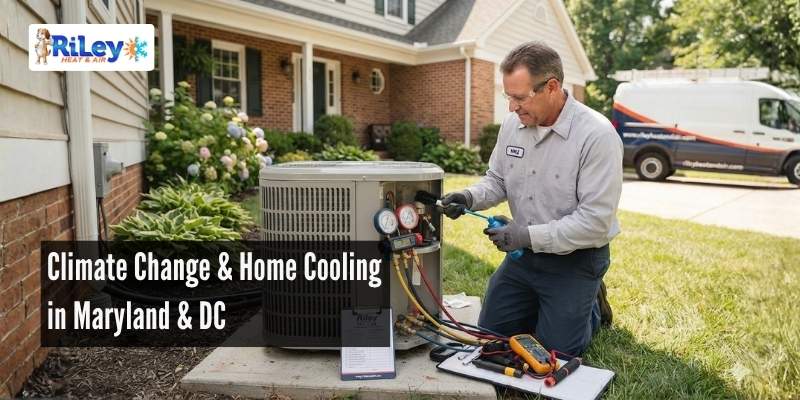
How Climate Change Is Reshaping Home Cooling Needs in Maryland & Washington, DC
Summers across Maryland and Washington, DC are becoming hotter, longer, and more humid, placing greater demands on home cooling systems. As temperatures rise and heat waves become more frequent, many homeowners are noticing their air conditioners running longer, struggling to maintain comfortable indoor temperatures, and increasing monthly energy bills.
Understanding how changing climate conditions affect your HVAC system can help you make smarter decisions about maintenance, energy efficiency, and future system upgrades.
A Changing Climate Means Longer Cooling Seasons
Over the last many decades, there have been some clear changes in seasonal weather patterns in the mid Atlantic. Summers are becoming longer, hotter, and the nights are not cooling off as they used to.
To Maryland and DC homeowners, this means:
- Air conditioners start running earlier during the spring season
- Cooling systems are still in operation well into the fall
- Heat waves are increasingly occurring more often
- Hot or warm days in a row put constant stress on HVAC systems
Many systems are now working heavily for almost half the year, rather than for just a few months. The added time on any component, of course, adds to the wear and tear.
Higher Temperatures Push HVAC Systems Harder
Each air conditioner is designed to operate in a fixed range. As the outdoor temperature increases much higher than the design of the comfort temperature, the cooling system works more seriously, and the efficiency of the cool system will decrease.
This often results in:
- Longer cooling cycles
- Higher electricity consumption
- Increased compressor stress
- More frequent breakdowns
- Reduced equipment lifespan
Systems that performed well 5 or 10 years ago may be facing difficulties now in the hot environment.
Humidity Is Becoming an Even Bigger Challenge
Temperature is just part of the equation. In the summer months, the level of moisture in the air has been a problem in Maryland and DC, but when the air is really that moist, homes are hotter than they read on the thermometer.
The high level of humidity in the house may lead to:
- Sticky indoor air
- Poor sleeping conditions
- Increased mold risk
- Musty odors
Your air conditioner is not just cooling your home down; it's also getting rid of water in the atmosphere.
Extreme Heat Events Are Becoming More Common
In recent years, Maryland and Washington, DC have experienced more frequent periods of extreme heat. During prolonged heat waves, air conditioners often run for extended hours with little opportunity to cycle off, placing additional stress on compressors, electrical components, and other critical parts. Preparing your HVAC system before peak summer temperatures arrive can help reduce the risk of unexpected breakdowns.
Older Air Conditioners Face Greater Pressure
There are still a number of systems in the region that are 10-15 years old in the house. These units could still be in use, but climate change will bring their weaknesses to light much sooner.
Older systems may suffer from the following problems:
- Declining efficiency
- Reduced cooling capacity
- Refrigerant issues
- Aging electrical components
- Dirty evaporator coils
- Airflow restrictions
These problems are more apparent as outdoor temperatures continue to rise.
Rising Energy Bills Reflect Changing Weather
The first thing homeowners realize is higher monthly utility bill.
A longer cooling time results in:
- More electricity consumption
- The greater the peak demand charge
- Higher levels of strain in the afternoon heat.
- Higher seasonal running costs.
If the cost of electricity doesn't rise, but you run your air conditioner for longer each day, naturally your bills will be higher.
Proper System Sizing Matters More Than Ever
A number of older houses were constructed using historical dates, which are no longer applicable to the present climate.
If the air conditioner is too small, it can:
- Run continuously
- Wear out prematurely
- Consume excessive electricity
If it is oversized, the unit cools too quickly, and stops cooling the air before it has extracted the desired moisture. The outcome is a cool, but damp, house that is uncomfortable.
Better Insulation Plays a Bigger Role
With the weather getting hot, it is important to keep cool air inside. Deteriorated insulation permits conditioned air to leak out and “unconditioned” air to flow in from the outside.
Typical sources of cooling loss are:
- Attics
- Crawl spaces
- Exterior walls
- Around windows
- Around doors
- Ductwork located in hot attics
Fewer hot and cold spots in the house and less burden on the air conditioner are achieved by improving insulation.
Smart Thermostats Help Manage Changing Conditions
Today's smart thermostats are valuable tools for adapting to changing weather conditions while improving comfort and energy efficiency. They can:
- Automatically adjust temperature schedules
- Learn your household's occupancy patterns
- Reduce unnecessary system runtime
- Monitor energy usage
- Provide maintenance reminders
- Optimize cooling efficiency
Homeowners will be better able to balance comfort with energy savings as opposed to a constant "round the clock" operation. If you're considering upgrading your home's comfort system, explore our guide on the benefits of installing a smart thermostat to learn how it can improve comfort, convenience, and energy efficiency.
Preventive Maintenance Is More Important Than Ever
As cooling systems are being used more frequently this year, maintenance is no longer an option.
Good maintenance services usually consist of:
- Cleaning coils
- Checking refrigerant levels
- Inspecting electrical components
- Testing airflow
- Replacing worn parts
- Verifying thermostat performance
Regular service helps identify minor issues before they become costly repairs on the hottest days of summer. For even earlier detection, modern HVAC technology is making preventive care smarter than ever. Learn how AI can predict your air conditioner will fail before it breaks and how predictive monitoring can help reduce the risk of unexpected system failures.
Signs Your Cooling System May No Longer Meet Your Home's Needs
If your cooling system has the following symptoms, you may need a professional evaluation:
- An imbalance in the temperature of the various rooms
- Constant system cycling
- High humidity indoors
- Rising energy bills
- Frequent repairs
- Poor ability to keep thermostat at desired temperature
- Unusual noises or loud noise that occur during operation.
Solving these problems early can save more costly later repairs.
Preparing Your Home for the Future
Preparing your home before the hottest months of the year can improve comfort, lower energy costs, and reduce the likelihood of unexpected HVAC repairs. As climate patterns continue to change, Maryland and Washington, DC are expected to experience warmer summers and more frequent extreme heat events. While homeowners can't control the weather, they can take practical steps to improve indoor comfort, increase energy efficiency, and enhance the long-term performance of their HVAC system.
Consider:
- Making annual HVAC maintenance appointment ahead of the peak cooling season
- Regularly changing air filters to ensure adequate air flow
- Sealing air leaks around windows and doors
- Adding insulation to attic space as required
- Replacing an air conditioning unit with a high efficiency unit when it is time
- Installing smart thermostat to optimize energy consumption
A proactive approach can help ensure your home remains comfortable in the event of seasonal temperature changes outdoors and minimize unnecessary energy costs.
Stay Comfortable as Cooling Needs Continue to Evolve
As summers continue to become hotter and more humid, preparing your HVAC system is one of the best ways to maintain indoor comfort, improve energy efficiency, and reduce the risk of costly repairs. Whether you need preventive maintenance, a system upgrade, or expert advice on improving your home's cooling performance, Riley Heat & Air is here to help.
Proudly serving homeowners throughout Maryland and Washington, DC, our experienced technicians provide reliable HVAC maintenance, air conditioning repairs, and energy-efficient cooling solutions to keep your home comfortable all summer long.