

RECENT POSTS
-
 October 19, 2026
 -
 October 12, 2026
 -
 October 5, 2026
 -
 September 22, 2026
 -
 September 15, 2026
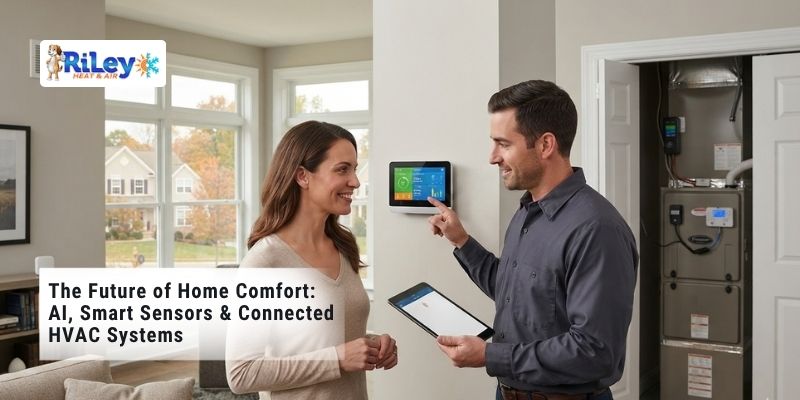
The Future of Home Comfort: AI, Smart Sensors & Connected HVAC Systems
Modern HVAC systems do much more than heat and cool your home. With the help of artificial intelligence (AI), smart sensors, and connected technology, today's systems can learn your daily routine, optimize energy use, monitor system performance, and even detect potential problems before they become costly repairs. The result is greater comfort, improved energy efficiency, and fewer unexpected breakdowns.
If you're planning an HVAC upgrade or simply want to understand the latest technology, learning how these innovations work can help you make a smarter long-term investment.
The Evolution of HVAC Technology
The traditional HVAC systems work on basic instructions. The thermostat will detect the temperature at which it has reached a set level, tell the equipment to start and then stop it when the temperature is reached.
A good method, but it doesn't take many important factors into account such as:
- Occupancy
- Outdoor weather changes
- Indoor humidity
- Air quality
- Daily household schedules
Modern connected HVAC systems have the ability to continuously collect data from a variety of data sources and make better operating decisions. They don't follow set times and instead live flexibly to changing circumstances during the day. This leads to a more comfortable home, with greater energy efficiency.
What Does AI Actually Do in an HVAC System?
AI doesn't take the place of your HVAC equipment; it makes it smarter. The information gathered by the sensors, thermostats, weather forecasts and system performance data is analysed by AI to enhance the system's operation over time.
These are some of the most useful features to have:
1. Learning Your Routine
AI thermostats learn patterns. The system learns this pattern with every passing day, and, when it is programmed to vary its setting at daytime, the heat and coolness are automatically reduced when you and your family are away. The system then restores comfortable temperatures for you before you return without using your hands.
2. Maximizing Energy Consumption
Not being switched off and on constantly, the system's performance is dynamically controlled through AI depending on the demand.
This helps:
- Reduce energy waste
- Use more uniform temperatures.
- Save money on your bills each month
- Minimize "needless equipment wear".
Smart thermostats can potentially help you save a significant amount of energy from heating and cooling, if used correctly
3. Predictive Maintenance
A major benefit of AI is its ability to detect issues before they occur. The parameters of operating conditions are monitored within connected systems such as airflow, temperature difference, compressor performance and run times.
When the system starts to run outside of its parameters, it can warn the homeowners or HVAC technician before it fails. You get a heads-up instead of having to wait for the air conditioner to break down.
The Growing Role of Smart Sensors
Today's HVAC systems are equipped with smart sensors that are the eyes and ears of the system. Smart sensors sense multiple temperatures at home's various locations, as opposed to the single temperature that is measured by a conventional thermostat.
These sensors monitor:
- Room temperature
- Humidity levels
- Occupancy
- Indoor air quality
- Airflow
- Concentrations of carbon dioxide (for some systems)
The extra data powering the HVAC system enables it to make much more exact alterations.
Connected HVAC Systems Bring Everything Together
As part of the smart home network, connected HVAC systems are becoming a reality.
They do not work alone, but are in communication with devices like:
- Smart thermostats
- Mobile apps
- Voice assistants
- IAQ monitors
- Smart home automation platforms.
This connectivity allows homeowners to have a much deeper understanding and control.
Can Older HVAC Systems Be Made Smarter?
Many homeowners assume they need to replace their entire HVAC system to benefit from smart technology. In many cases, that's not true. Existing systems can often be upgraded with smart thermostats, wireless sensors, and connected monitoring devices that improve comfort, energy efficiency, and system awareness without requiring a complete replacement.
However, if your HVAC system is older or nearing the end of its lifespan, upgrading to a modern, AI-compatible system may provide greater long-term performance and energy savings.
Better Indoor Air Quality Through Intelligent Monitoring
Temperature is not the only factor of home comfort! IAQ has become a key consideration in the design of today's HVAC systems.
Today there are a variety of inter-dependent systems that record the following:
- Humidity
- Airborne particles
- Ventilation
- Filter performance
Humidity may be automatically adjusted up in this situation if it becomes too humid. You'll be notified to change air filters before air flow decreases due to dirt. This type of monitoring can be beneficial for families who suffer from allergies, asthma or other respiratory issues, as it can help make the home more comfortable.
Smarter Zoning Creates Personalized Comfort
Each home is unique in terms of its comfort needs. There's the one who wants cooler bedrooms and the other who wants a warmer home office. Zones can be programmed to different temperatures to save cooling and heating the entire house the same temperature.
Combined with AI and occupancy sensors, zoning is further enhanced in efficiency. The system concentrates on using heat or cool on only the rooms that are used.
Benefits include:
- Greater comfort
- Lower energy consumption
- Reduced equipment strain
- Better temperature consistency
This type of technology can be particularly beneficial in more spacious homes or houses with multiple levels in which temperatures can fluctuate between levels.
Can AI Replace HVAC Technicians?
AI is able to help in diagnosing and monitoring, but it is very important that there are professionals present.
Proper HVAC technicians have to be on-site in order to:
- Install equipment properly
- Conduct inspections
- Diagnose mechanical issues;
- Deal with the refrigerant systems
- Conduct repairs safely
Find a compromise between the performance of the whole system and the performance of its elements. Remember that AI is your colleague, not an opponent. This technology will be helpful for technicians who will identify the problem quickly, and the homeowner who will avoid big repairs.
Is It Time to Upgrade?
Smart technology doesn't always mean that you must upgrade your HVAC system completely.
Many of the homeowners start with:
- Smart thermostats
- Wireless room sensors
- Inside air quality monitors (IQM) that are connected
- HVAC monitoring systems
If your heating or cooling system is nearing the end of its life, however, there may be more cost savings to be gained in the long term with equipment that can be integrated with artificial intelligence.
The Future of Home Comfort Is Already Here
AI, smart sensors, and connected HVAC technology are transforming the way homeowners manage comfort, energy efficiency, and system performance. Whether you're looking to install a smart thermostat, upgrade to a high-efficiency HVAC system, or explore connected home solutions, these innovations can help create a more comfortable and cost-effective home.
Homeowners throughout Maryland and Washington, DC trust Riley Heat & Air for expert HVAC installation, maintenance, and smart home comfort solutions. Contact our experienced team to discover the right HVAC technology for your home.