

RECENT POSTS
-
 November 2, 2026
-
 October 26, 2026
-
 October 19, 2026
-
 October 12, 2026
-
 October 5, 2026
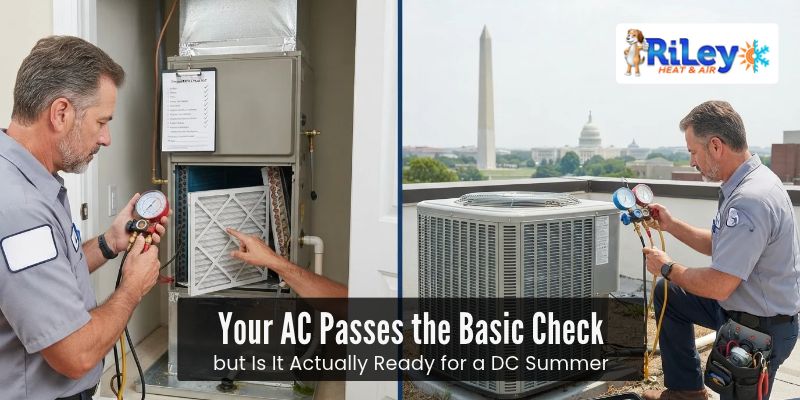
Your AC Passes the Basic Check—but Is It Actually Ready for a DC Summer
An AC unit that comes on and cools air might appear ready for the summer, but that does not necessarily mean that the unit is ready to provide cool air for weeks and weeks under hot, humid conditions. A simple check can easily overlook the following factors: blocked airflow, drainage problems, refrigerant problems, and decreased efficiency in Washington, DC.
Being really prepared means making sure that the system works well for hot weather.
1. Cooling Performance Is More Than Cold Air
During a short test period, the system may cool effectively. Still, over several hot days, it can become an issue if it's restricted by dirty coils, incorrect refrigerant levels, and/or insufficient airflow.
The professional inspection must include:
- Proper supply and return airflow
- Clean coils – both inside and outside
- Appropriate refrigerant level based on the manufacturer’s requirements
- Proper thermostat regulation of the system
ENERGY STAR recommends pre-season inspection of the system to detect any issues before the system starts working under peak cooling load of the year.
2. Check Airflow Before the Heat Arrives
In case cold air fails to flow due to improper circulation, dust accumulation along with clogged filters, obstructed vents and dirty blower parts could be the reason behind the problem. This creates a disruption in heat balance and results in extended running time and uncoolable rooms.
At least on a monthly basis, you need to check your filters and replace or clean them according to the manufacturer's recommendations. The replacement period differs depending on filters, pets, conditions and use of the equipment.
You must also make sure that:
- There is no obstruction to vents by furniture or curtains
- There is enough space around the exterior unit
- Safe cleaning of the outdoor unit area is conducted
- Filters are properly fitted
Note that airflow problems are one of the most critical maintenance problems because they affect cooling performance, accelerate equipment aging, and are easy to detect.
3. Make Sure Your AC Can Handle DC Humidity
Cooling is only part of the job. Your air conditioner must also remove the moisture from the air in your house. The system responsible for controlling the humidity levels is very important for making the summer in DC comfortable; if the temperature is set right and it is not working, you will feel discomfort in your house.
The following are the reasons for this problem:
- Evaporator coils being dirty
- Improper refrigerant charge
- Obstructed condensate drain line
- Overcooling surfaces, which create a fog
- Equipment location in relation to the fog
While your AC temperature may be set correctly, an inspection by an expert could find out the reason for the moisture if you feel damp in your house. It may be hard to understand what the problem really is because humidifiers’ problems can easily be mistaken for thermostat problems.
4. Inspect the Condensate Drain Line
Air from which the water is taken will end up in the water collecting tray (condensate pan) and leave the house through the condensate line. In case of any dirt, algae, or other substances blocking it, water may leak, causing leakage, water damage or shutting down of the safety system automatically.
Always make sure that your line and pan are checked before summer and beware of:
- Water spots around the air conditioning unit
- Calm sounds of wind and rain
- System malfunction
The most efficient drainage system during continuous operation of the AC is very important.
5. Don’t Overlook Electrical Components and Refrigerant
Some reasons why your air conditioning unit may be unreliable or prone to breakdowns include loose connections, old capacitors, failed motors, or broken wiring. High refrigerant levels can be responsible for either poor cooling or the stress of the compressor.
Inspection of these components should be done by an HVAC technician and not the homeowner. The components include: electrical connections, motor, pressures, refrigerant levels, and system controls. ENERGY STAR suggests that these components be included in the cooling maintenance process.
6. Evaluate Your Thermostat and Ductwork
Even a properly functioning AC may not be able to cope with its task if the thermostat/ducts are problematic. Improper operation of the thermostat, which can result in unnecessary cooling of the room and leaks in ductwork, will cause cooling air to escape before it reaches your rooms.
Look for:
- Accurate temperatures displayed on the thermostat
- Suitable temperature schedule for you.
- Damaged or separated sections of the ducts visible from easily accessible places
- Rooms with a low air exchange rate
- Rooms that always have a low air exchange rate
The issue can be caused by improper duct design/duct balancing/insulation rather than AC capacity itself.
7. Know When a Basic Service Is Not Enough
While a simple service may solve many common problems, not all problems can be solved through routine maintenance. If your fridge does not work properly, you have an abnormally high electricity bill, your fridge is constantly moist inside, your fridge fails to cool as it is supposed to do, or your fridge makes some weird noises, there must be some problems.
In case your AC gives trouble every summer despite the fact that it was maintained on schedule, consider its age, condition, and cooling capacity. Also, the installation has to include the correct size and duct inspection, because too big or too small equipment causes certain troubles.
Is Your AC Ready for the DC Summer?
A basic check does not ensure that the engine will run properly in the summertime. The engine consists of air circulation, humidity control, draining, electrical parts, refrigerant, and ductwork.
It is important to schedule an appointment with professionals who will do an extensive analysis of your heating system at Riley Heat & Air before the hot season. It will allow you to find possible issues and prepare for the Washington, DC summer in advance. It is better to concentrate on prevention than repairs under pressure.