

RECENT POSTS
-
 September 22, 2026
 -
 September 15, 2026
 -
 September 8, 2026
 -
 September 1, 2026
 -
 August 24, 2026
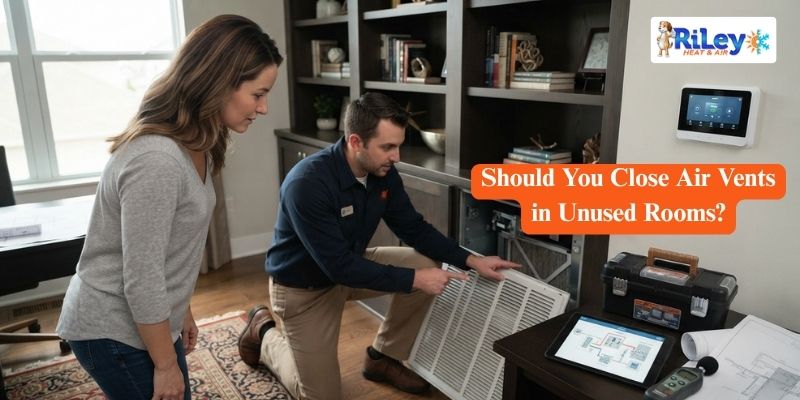
Should You Close Air Vents in Unused Rooms? HVAC Experts Explain
Sometimes it feels like a waste to keep cooling or heating an unoccupied room day after day. It is commonly believed that closing the air vents in unoccupied rooms will allow conditioned air to be distributed to occupied rooms, which will save money on energy costs. Of course, it sounds reasonable, but that's not always how your HVAC system works.
Closing too many air vents can restrict airflow, increase pressure in your ductwork, and potentially make your HVAC system work harder. So, should you close the air vents in unoccupied rooms? It's worth considering what HVAC experts recommend.
What Happens When You Close an Air Vent?
Your HVAC system is designed to move a certain volume of air through the ductwork. Closing a supply vent does not make that air disappear. Instead, restricting several supply vents can reduce overall airflow and increase pressure within the duct system, potentially affecting HVAC performance.
According to the U.S. Department of Energy, closing vents in unused rooms is generally not an efficient way to save energy because HVAC systems are designed and balanced for a specific amount of airflow throughout the home. Closing one vent occasionally may not cause an immediate problem, but routinely closing vents in several rooms can create airflow and comfort issues.
Why Closing Too Many Vents Can Be a Problem
1. It Can Restrict Airflow
To ensure your HVAC system operates properly, you need to have sufficient airflow. If several vents are closed, the supply/return air balance will be disrupted.
Limited vent capacity can cause:
- Uneven temperatures
- Reduced comfort
- Run times of longer systems
- Increased energy consumption
- Greater equipment strain
A significant restriction in airflow can lead to such problems in some systems as freezing of the evaporator coil.
2. It Doesn't Necessarily Lower Your Energy Bill
Closing vents, by the name, is an obvious principle – close the cooling and Closing vents may seem like an obvious way to reduce heating and cooling in unused rooms. Unfortunately, your HVAC system does not always reduce energy consumption proportionally when vents are closed.
For example, if the thermostat is located in the living room, the system will continue operating based on the temperature detected there, even if the vent in a bedroom is closed. The unused room may simply become warmer or cooler rather than producing meaningful energy savings.
3. It Can Create Pressure Imbalances
Airflow ducts are used in current buildings to transport the air for conditioning purposes. Blocking the supply air vents will have an impact on this balance.
This can increase the pressure inside the air delivery system, leading to air leaking through the ducts or other air routes.
What About Closing the Door Too?
It might seem that closing both the vent and the door would effectively isolate the room. However, this can cause the room to develop a greater temperature difference from the rest of the house.
When a room receives inadequate conditioned air, its temperature can vary significantly from adjacent spaces. Differences in insulation and air sealing can make this effect even more noticeable.
Instead of simply shutting down airflow, consider whether the room could be managed through a properly designed zoning system.
A Better Solution: HVAC Zoning
A zoning system is a method of dividing a house into different zones, each of which is equipped with its own independent heating or cooling unit. Airflow is controlled to each zone by a motorized damper that is controlled by demand.
Some options for zoning include:
- Bedroom
- Main living areas
- Upstairs spaces
- Home offices
- Guest rooms
This enables HVAC to deliver conditioned air without having to open or close vents.
What Should You Do With an Unused Room?
Before closing the vent, consider these options if you have a guest room, storage room, or other space that you don't use often:
- Adjust the Thermostat: Slightly changing the temperature can save on heating or cooling costs when there is no need for it and still help circulate air.
- Improve Insulation: Good insulation prevents unused spaces from being too hot or too cold, and minimizes heat exchange between rooms.
- Seal Air Leaks: Conditioned air can flow out of the building through gaps around windows, doors, ductwork, and other areas. Air sealing can enhance the comfort in the house.
- Check Your Ductwork: Leaky or poorly insulated, or oversized ducts may lead to comfort issues that vent closing will not correct.
- Consider Smart Zoning: A zoning system may be more viable if specific rooms are found to require different temperatures on a regular basis.
When Should You Call an HVAC Professional?
Don't assume that closing vents is the answer if certain areas are consistently hot or cold.
Uneven temperatures may be a sign of:
- Ductwork problems
- Poor insulation
- Air leaks
- Improper HVAC sizing
- Blocked airflow
- Thermostat issues
- Aging equipment
The HVAC expert will have the chance to check out the complete HVAC system and figure out why some locations are not receiving the correct quantity of conditioned air.
The Bottom Line
So, should you close air vents in rooms you don't use? While occasionally closing one vent may not cause an immediate problem, routinely closing multiple vents is generally not a good way to save energy. Your HVAC system needs adequate airflow to operate properly, and excessive restrictions can affect system performance.
If certain rooms are consistently too hot or too cold, solutions may include improving ductwork, insulation, air sealing, or installing HVAC zoning. If you're not sure about the condition of your heating and cooling system, contact Riley Heat & Air for professional HVAC service to help improve comfort throughout your home.